Pooja rooms & mandirs
Pooja rooms and mandir units, planned for daily use
In most flats the pooja space is a corner, a niche or a wall unit rather than a separate room. What makes it work is the same either way: a steady place for the idols, light that suits them, somewhere for the lamp that will not scorch the wood, and room for everything a daily pooja needs.
A room, a niche or a unit
Which one you get is usually decided by the floor plan, not by preference.
- A separate pooja room — common in independent houses and larger flats. A small room with its own door, shelving for the idols and storage below.
- A niche — a recess built into a wall in the living or dining area, finished as a shrine, with or without shutters.
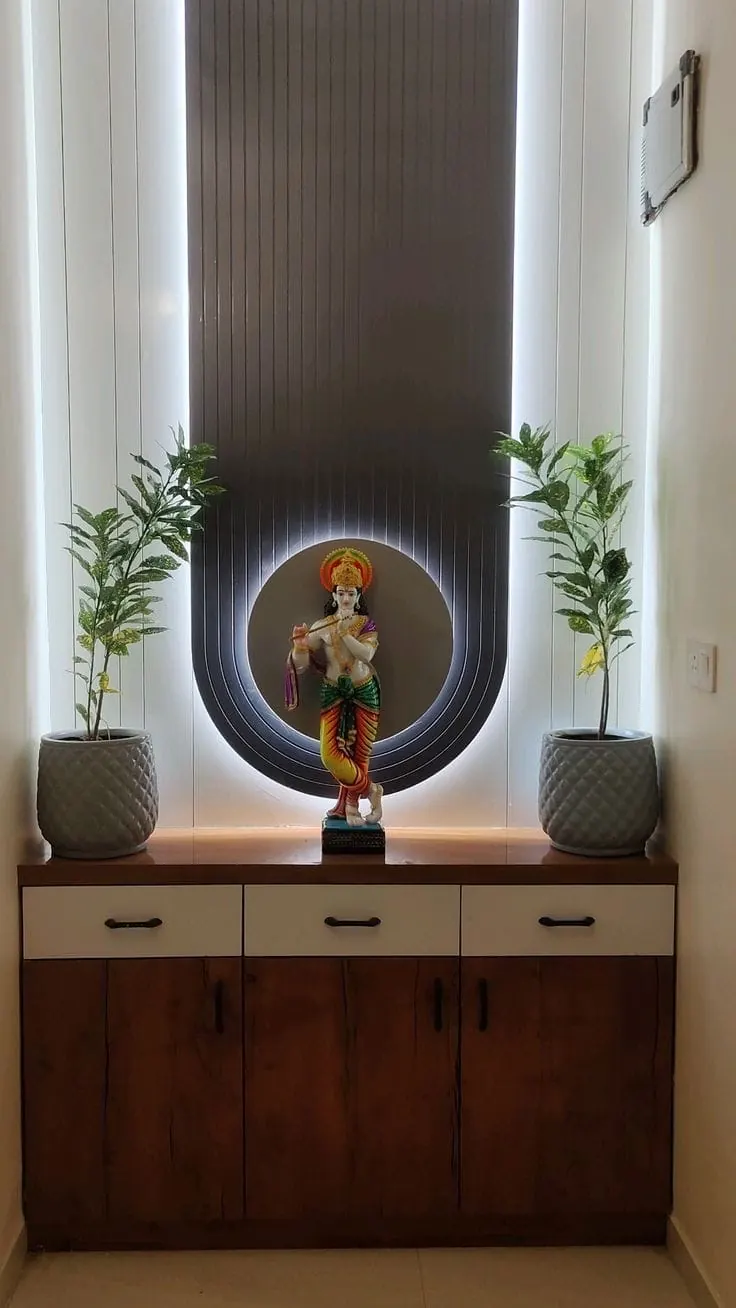
- A mandir unit — a floor-standing or wall-mounted cabinet with an open shrine above and drawers below. This is what most 2BHK and 3BHK flats end up with, because it needs only a short stretch of wall.
Pooja unit design: what goes where
Start with how the family prays, because it sets the height of everything else. For prayer standing up, the idol platform sits around chest height; for prayer seated on the floor, it comes down so the idols are at eye level from a sitting position.
- The idol platform, deep enough for the largest idol and its frame, with a raised step if there are several.
- A back panel — fluted, jaali-cut or backlit. It is what the eye lands on, and the light behind it does more than any carving.
- Drawers below for agarbatti, camphor, matchboxes, wicks, oil and prayer books, so the shrine itself stays clear.
- A place for the bell and for the flowers, planned rather than hung on a nail later.
The lamp, heat and smoke
This is the part that decides how the unit looks after a year. A diya or camphor flame next to laminate or veneer will scorch it, and the smoke from agarbatti and camphor darkens whatever sits directly above.
- A heat-proof base under the lamp — a brass or stone plate, not the laminate top itself.
- Clear space above the flame, or an open or ventilated top, so heat and smoke are not trapped against the panel.
- LED strips and wiring kept away from the lamp position, and the switch and socket placed before the unit is made, as with any lighting plan.
Pooja room door design
Not every pooja space needs a door. An open niche or unit is the norm in flats. A door or pair of shutters makes sense when the shrine sits in the living or dining area and the family wants it closed when not in use.
Jaali panels or fluted glass let the lamp show through when the doors are shut, which is why they are the usual choice. Bells along the top rail, brass handles and a raised threshold are common details. Check the swing: a hinged door has to clear the lamp and the flowers on the floor, and where it cannot, sliding or folding shutters solve it.
Direction and placement
Many families follow Vastu and ask for the pooja space in the north-east of the home, often with the idols facing east or west. Many also prefer it not to share a wall with a bathroom. We work to whatever the family follows; in a flat the choice usually comes down to two or three walls, and the options are easiest to see together at the site visit.
Materials
Solid wood such as teak or sheesham suits a traditional, carved mandir and takes polish well. Plywood with a veneer or laminate finish suits a modern unit and costs less. Jaali patterns are CNC-cut in MDF or ply, the same way as in a wooden partition. Whatever the material, the surfaces near the lamp should be the ones that are easiest to wipe down.
Talk it through first
Send a photo of the space on WhatsApp and we will tell you honestly what it needs — and whether it is something we should be doing.
+91 93460 71867 WhatsAppOpen every day, 9:00 AM – 9:30 PM
Kishmatpur, Bandlaguda Jagir Rd, Hyderabad 500086
From our work
Pooja rooms & mandirs we have done
Questions
Pooja rooms & mandirs — common questions
What height should a pooja unit be?
It depends on how the family prays. For prayer standing up, the idol platform usually sits around chest height. For prayer seated on the floor, it comes down so the idols are at eye level when sitting. Decide this first, because the rest of the unit follows from it.
Will the lamp damage a wooden mandir?
It can. A diya or camphor flame scorches laminate and veneer, and smoke darkens the panel above. Put a brass or stone plate under the lamp, leave clear space above the flame, and keep LED strips and wiring away from it.
Does a pooja space need a door?
No. Most flats use an open niche or a mandir unit. A door or pair of shutters helps when the shrine is in a living or dining area and the family wants it closed when not in use; jaali or fluted glass lets the lamp show through.
Also
Related work
Pooja rooms & mandirs by area
Get in touch
Tell us about the room
The quickest way to start is a phone call or a WhatsApp message with a photo of the space. We will tell you honestly whether it is something we should be doing.
- Studio
- Kishmatpur, Bandlaguda Jagir Rd,
Hyderabad, Telangana 500086 - Phone
- +91 93460 71867
- Hours
- Every day · 9:00 AM – 9:30 PM
- Plus code
- 993Q+7P Hyderabad, Telangana