False ceilings & lighting
Ceilings and lighting planned together, in that order
Lighting is the one trade that has to be decided first and is almost always decided last. Once the ceiling is boarded and skimmed, moving a downlight means cutting it open again.
Gypsum, POP or grid
- Gypsum board on a GI frame — the standard for homes. Dimensionally stable, fast, gives a clean flat plane and crisp cove details. Comes down in sheets if it ever needs opening.
- POP (plaster of paris) — allows curves and mouldings gypsum sheets cannot, and is applied wet, so it is slower and messier. Prone to hairline cracking as it cures if it is rushed.
- Grid / tile ceilings — offices, clinics and shops, where the services above have to stay reachable. Every tile lifts out.
- Cement fibre board — the right answer for bathrooms, utility areas and covered balconies. Gypsum in a wet area will eventually sag and stain.
The sequence that avoids rework
This order is not a preference, it is the only order that works:
- Agree the furniture layout, because that decides where light is needed.
- Mark the lighting plan on a drawing — every downlight, cove, spot and switch.
- Coordinate AC ducting and diffuser positions, and the kitchen chimney duct if it crosses.
- Electrical first fix — all wiring pulled and terminated in the ceiling void.
- Frame and board the ceiling.
- Skim, prime and paint.
- Second fix — fittings installed and tested.
Skipping straight to boarding because the ceiling contractor arrived first is the single most common cause of surface conduit and downlights in the wrong place.
Getting the light right
Three separate layers, and a room needs all three:
- Ambient — the general level. Cove lighting bounced off the ceiling is soft and flattering; a grid of downlights alone is flat and unforgiving.
- Task — directed where work happens. Under-cabinet strips in a kitchen, a reading light beside a bed. A ceiling light behind you puts your own shadow on the counter.
- Accent — a spot on artwork, a strip grazing a partition or a textured wall. This is what stops a room looking like an office.
On colour temperature: 2700K to 3000K (warm white) for living rooms and bedrooms, around 4000K (neutral) for kitchen and bathroom task areas. Mixing temperatures within one visible ceiling plane looks like a mistake, because it is one. Buy every fitting in a room at the same temperature and the same brand where you can — "warm white" is not standardised across manufacturers.
Put the lights on separate circuits. A living room where the coves, the downlights and the accent spots all switch together has one setting; split three ways it has seven. Dimmers on the ambient circuit are the cheapest upgrade in the room.
Height, and what a ceiling costs you
A gypsum false ceiling typically takes 100 mm to 150 mm off the room, more where an AC duct crosses. In a flat with a slab height around 3 m that is comfortable. Where the height is already tight, a full ceiling can make a room feel compressed — a peripheral cove around the edge with the centre left open gives most of the effect and keeps the middle of the room at full height.
Talk it through first
Send a photo of the space on WhatsApp and we will tell you honestly what it needs — and whether it is something we should be doing.
+91 93460 71867 WhatsAppOpen every day, 9:00 AM – 9:30 PM
Kishmatpur, Bandlaguda Jagir Rd, Hyderabad 500086
From our work
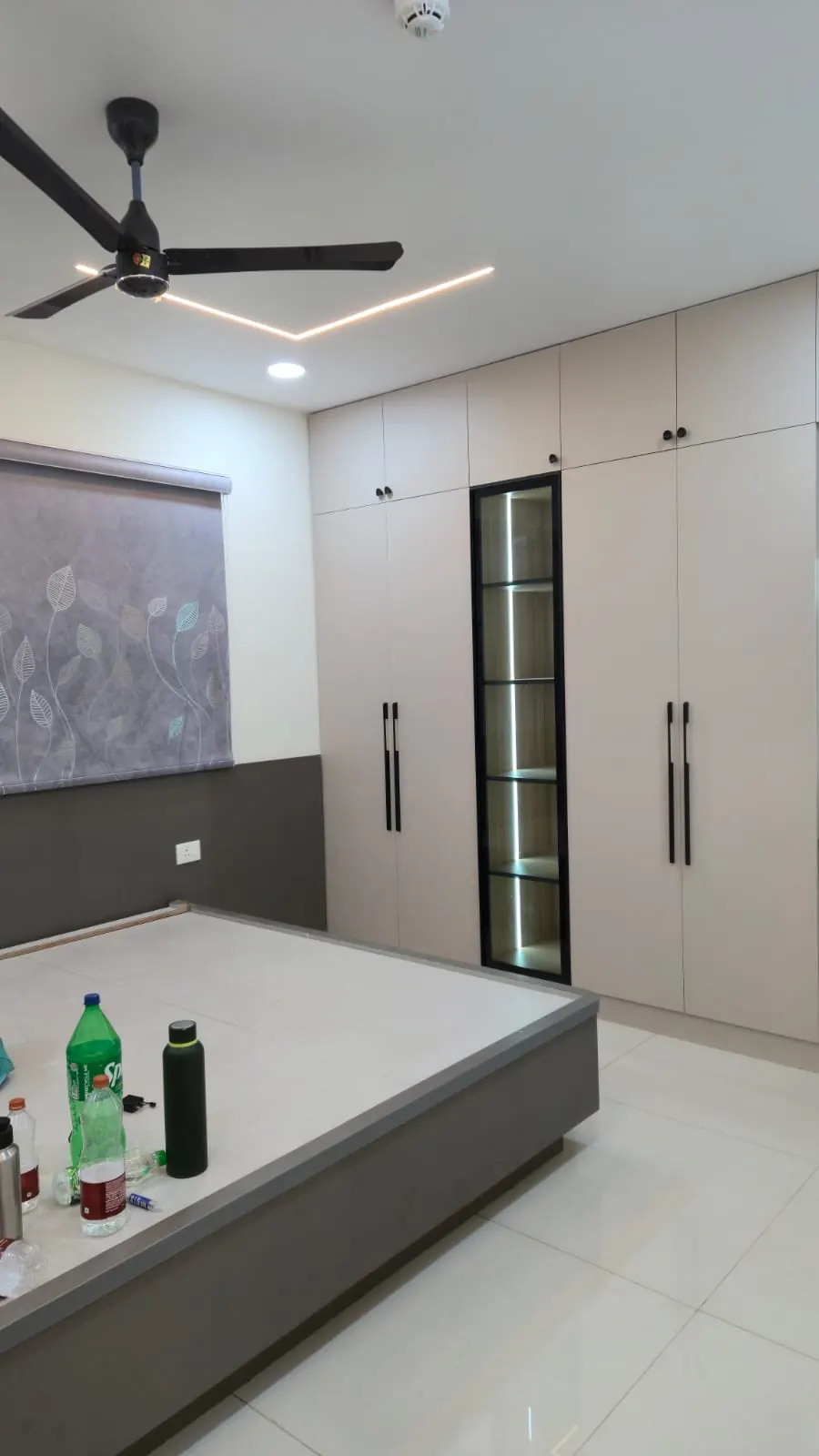
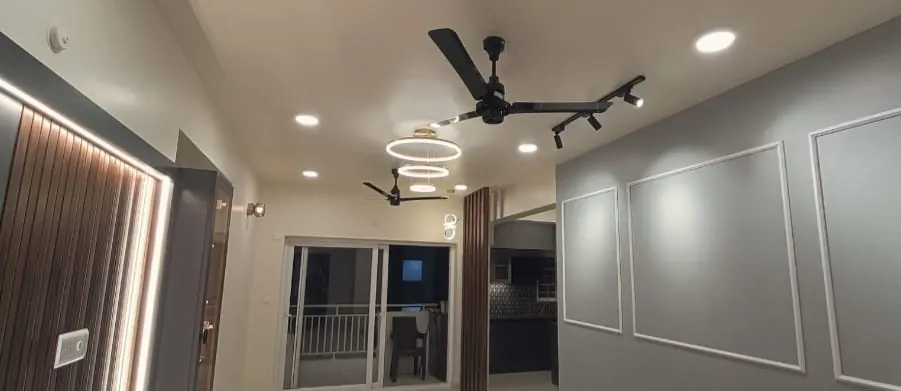
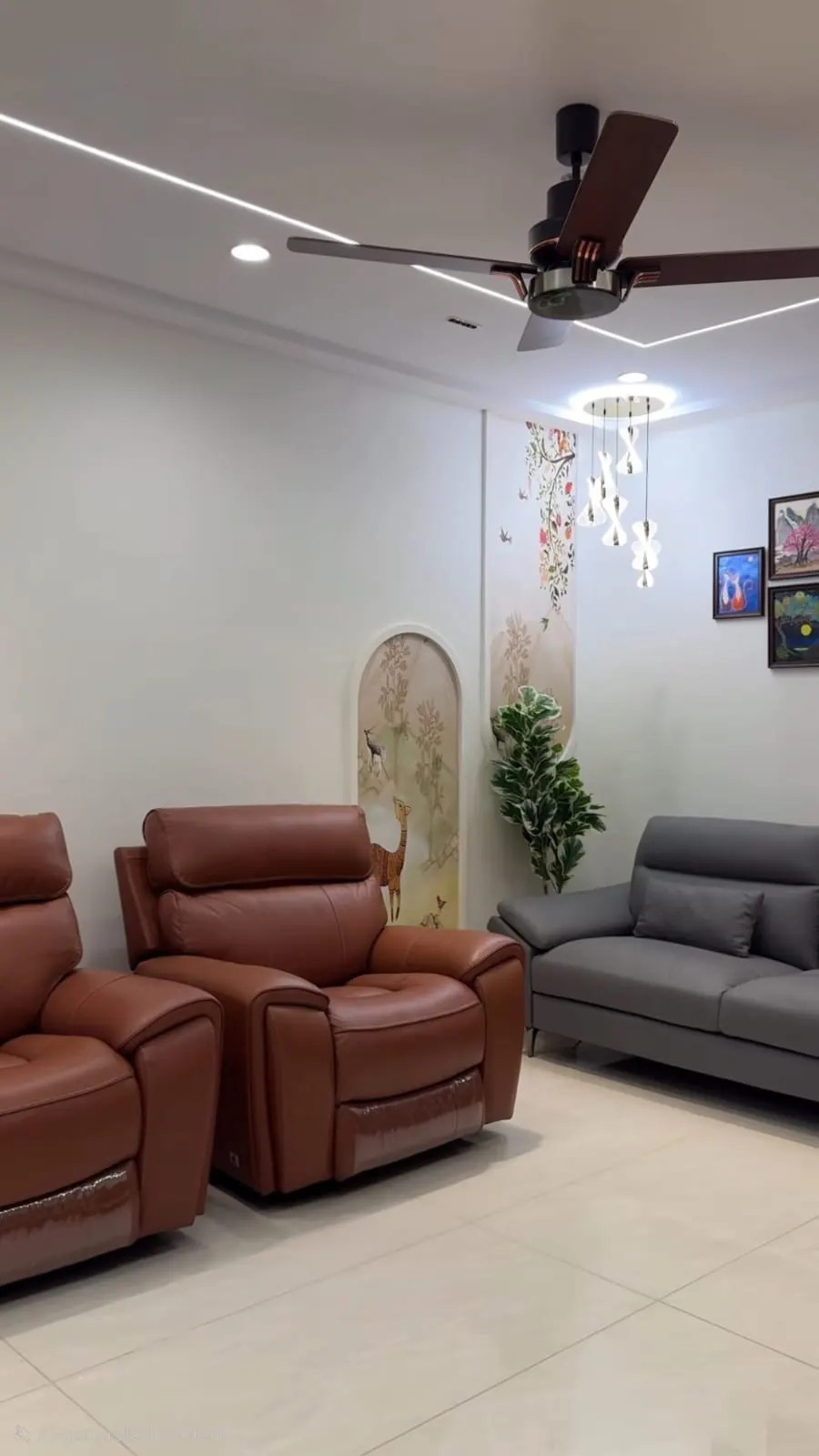
False ceilings & lighting we have done
Questions
False ceilings & lighting — common questions
What colour temperature should I use at home?
2700K to 3000K warm white for living rooms and bedrooms, around 4000K neutral for kitchen and bathroom task lighting. Do not mix temperatures within one visible ceiling plane.
How much height does a false ceiling take?
Typically 100 to 150 mm, and more where an air-conditioning duct crosses. Where ceiling height is already tight, a peripheral cove with the centre left open keeps the middle of the room at full height.
Can gypsum board be used in a bathroom?
It is not the right material there. Bathrooms, utility areas and covered balconies should use cement fibre board — gypsum in a wet area will eventually sag and stain.
Also
Related work
False ceilings & lighting by area
Get in touch
Tell us about the room
The quickest way to start is a phone call or a WhatsApp message with a photo of the space. We will tell you honestly whether it is something we should be doing.
- Studio
- Kishmatpur, Bandlaguda Jagir Rd,
Hyderabad, Telangana 500086 - Phone
- +91 93460 71867
- Hours
- Every day · 9:00 AM – 9:30 PM
- Plus code
- 993Q+7P Hyderabad, Telangana